What it is
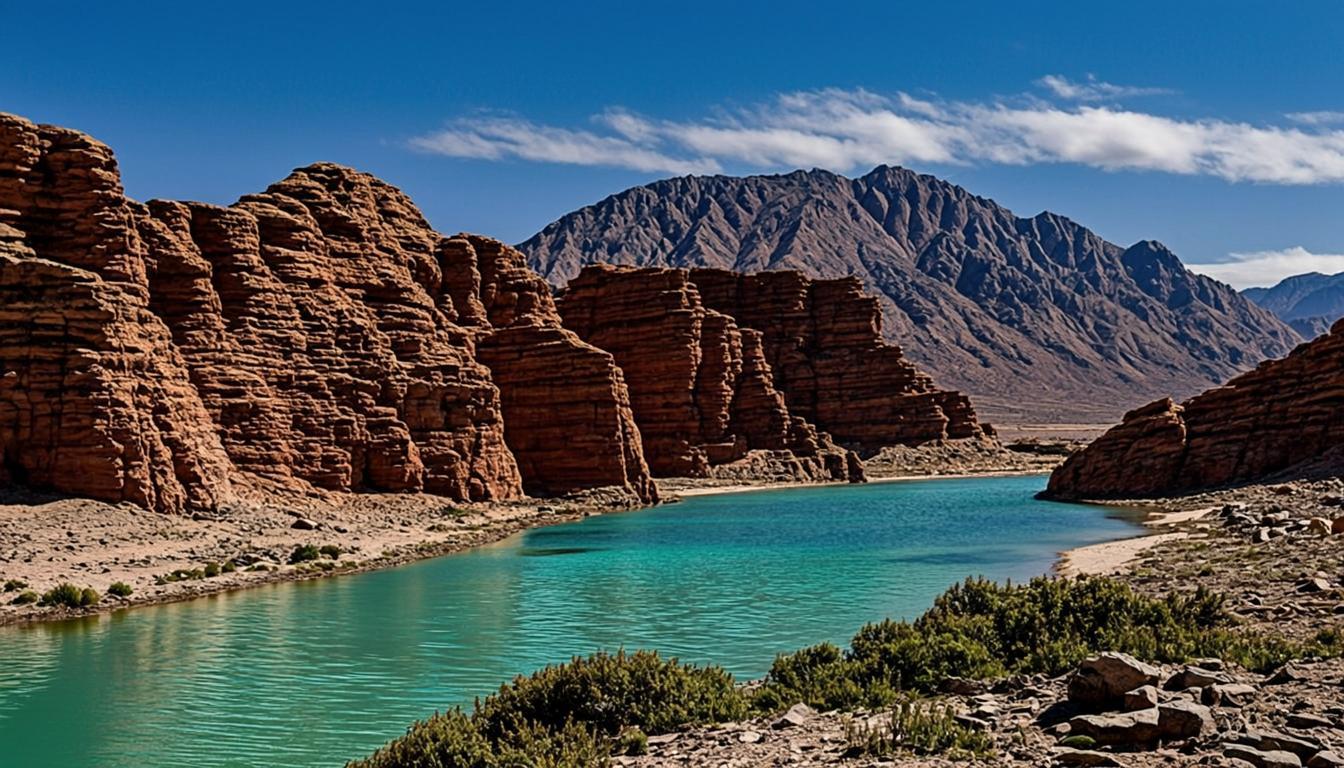
The Salar de Atacama is the white salt flat south of San Pedro de Atacama, and what you actually visit is not a single attraction but a chain of lagoons that sit on top of it, each with its own gate, its own hours and its own price. The nearest measured one is Laguna Tebinquinche, 14 km from town; Laguna Cejar is 19 km, Ojos del Salar 20 km, Lagunas Escondidas de Baltinache 30 km and Laguna Chaxa 56 km. The salt surface of those lagoons sits at 2,300 m; Chaxa is measured at 2,305 m.
Each lagoon is a different stop with a different measured profile: Tebinquinche takes 1-2 hours and is best in the last 90 minutes of daylight; Cejar takes 3-4 hours and gets its golden light in the 16:00-17:00 slot; Ojos del Salar takes 1-2 hours from mid-morning to mid-afternoon; Escondidas de Baltinache takes 2-3 hours in the last two hours of daylight into sunset; Chaxa takes 2-3 hours and is a sunset stop where the flamingos feed. All five are measured as self-guided, and the whole salar sector sits at 2,300 m.
Why go
One road, five lagoons: the measured spread runs from 14 km (Tebinquinche) to 56 km (Chaxa), so a half-day or a full afternoon fits inside the same salt flat.
The best mirror on the planet for sunset: Tebinquinche peaks in the last 90 minutes of daylight and Escondidas de Baltinache in the last two hours.
Every lagoon of the salar proper is self-guided and has its own published gate price, so you know what you are paying before you drive out.
It is the natural base for the altiplano sector: the measured Lagunas Altiplanicas sit 105 km out at 4,140 m and Piedras Rojas 120 km at 4,145 m.
Visiting Salar de Atacama (Atacama Salt Flat)
How to get there
The salar road leaves San Pedro de Atacama heading south. The measured stops on it are Tebinquinche at 14 km and 25 minutes, Cejar at 19 km and 25 minutes, Ojos del Salar at 20 km and 30 minutes, Escondidas de Baltinache at 30 km and 40 minutes and Chaxa at 56 km and 55 minutes. Fill up in town first: there is no fuel, food or shop in the sector.
Many salar tours cover two or three of these lagoons in the same afternoon — check the itinerary before booking.
Bikes work for the closest stops (about 1 h 30 each way to Ojos del Salar), but the exposed return in the afternoon heat is the hard part.
Signal is unreliable at the gates and most of them are cash-first, so carry small bills.
Pick one or two lagoons per afternoon rather than five: the distances are short, but every gate has its own hours.
Which lagoon, and when
The measured profile of each lagoon, so you can build the afternoon around the light instead of around the map. Every fee is charged at its own gate and every one of them changes, so verify on site.
Laguna Tebinquinche — 14 km, 25 min, 2,300 m, CLP 10,000, easy, 1-2 hours. Best in the last 90 minutes of daylight.
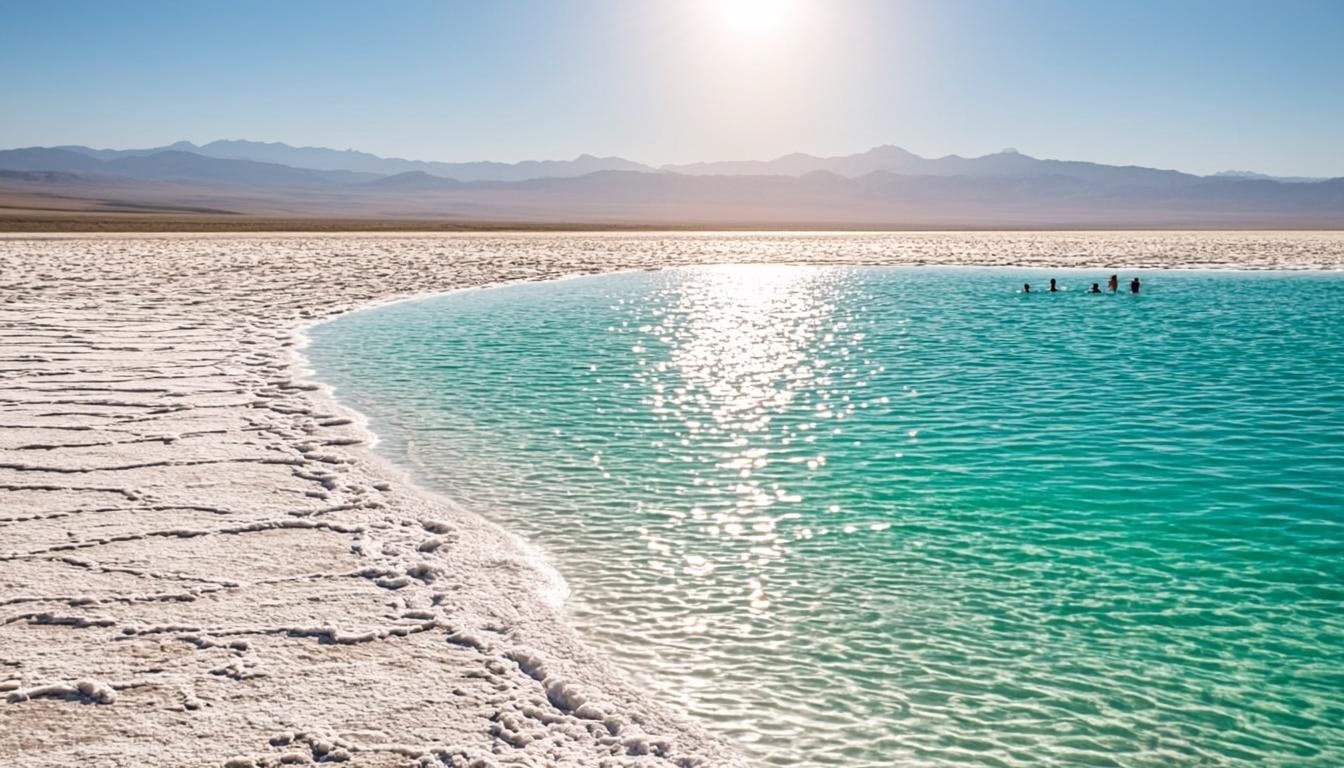
Laguna Cejar — 19 km, 25 min, 2,300 m, CLP 25,000, easy, 3-4 hours. The 16:00-17:00 slot gets the golden light.
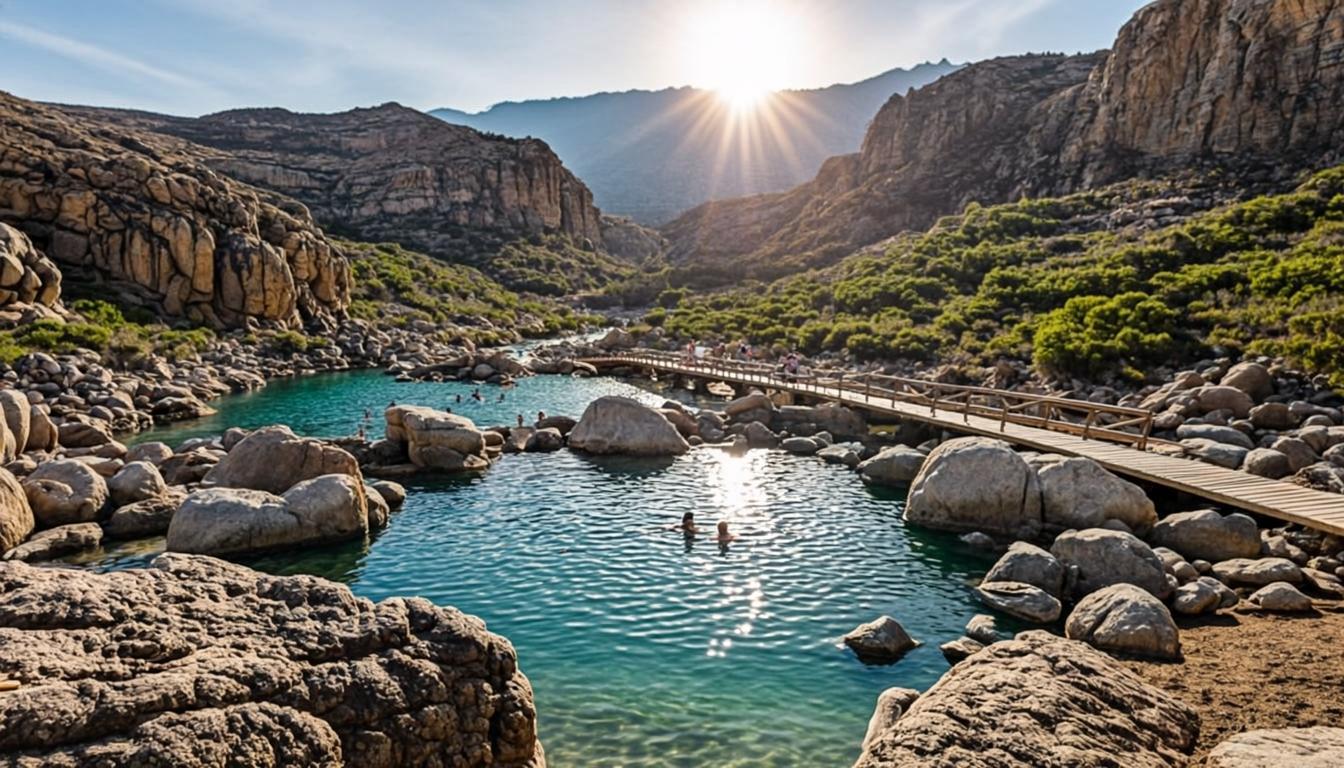
Ojos del Salar — 20 km, 30 min, 2,300 m, CLP 8,000, easy, 1-2 hours. Mid-morning to mid-afternoon, and it pairs with Cejar.
Lagunas Escondidas de Baltinache — 30 km, 40 min, 2,300 m, CLP 15,000, easy, 2-3 hours. The last two hours of daylight into sunset.
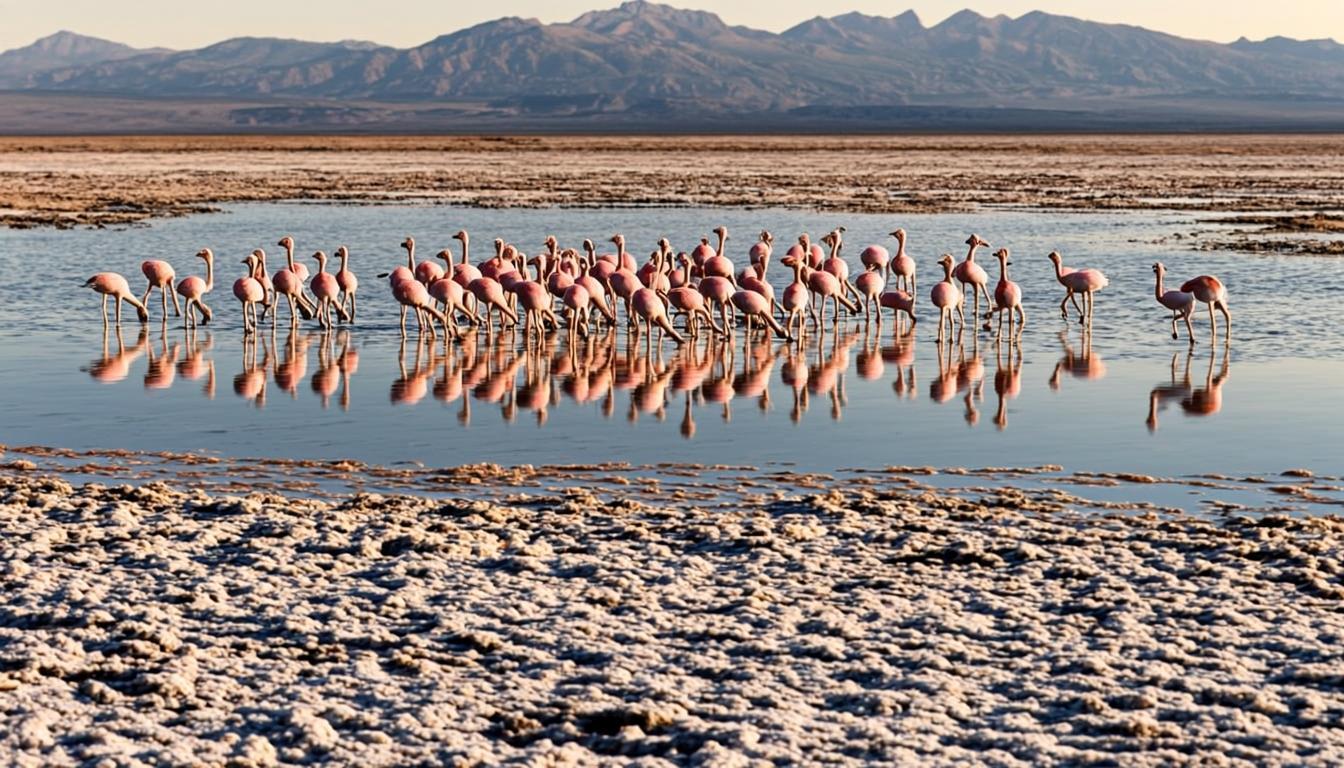
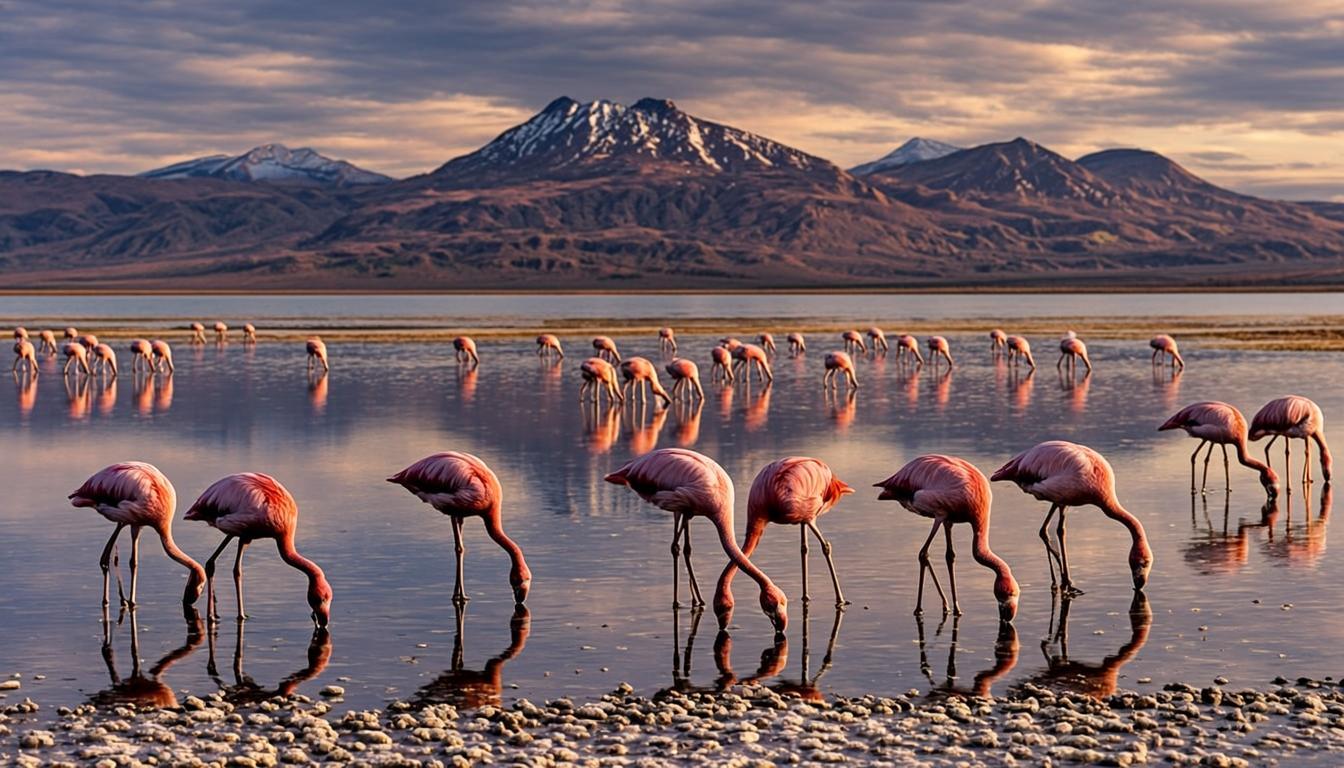
Laguna Chaxa — 56 km, 55 min, 2,305 m, CLP 15,000, easy, 2-3 hours. Sunset: the flamingos feed actively in golden light.
With one afternoon, take Tebinquinche near sunset; with two, add Cejar in the early afternoon.
What the salar does not have
There is no single access gate and no single ticket: the salar is a chain of independent sectors, each run by its own community or by CONAF, each with its own hours and its own price. And swimming is not a given. It is allowed at Cejar, at both Ojos del Salar pools and in the one designated lagoon of Lagunas Escondidas de Baltinache. It is not allowed at Tebinquinche (flamingo habitat and a sunset viewpoint) nor at Chaxa (a protected wetland where rangers enforce the no-swim rule). Drones are banned across the reserve sectors.
No single ticket and no single gate: Tebinquinche, Escondidas de Baltinache and Chaxa are cash-first, and Cejar takes cash or card.
No swimming at Tebinquinche or Chaxa, and only one of the seven Escondidas lagoons is open for floating.
No swimming in the altiplano sector either: Miscanti and Miniques and the Aguas Calientes lagoon at Piedras Rojas are protected wetlands.
No shops, no fuel and no shade in the sector, and the salt crust cuts like coarse sandpaper.
Check which lagoon you actually want to swim in before you buy anything: three of the five allow it, and only one Escondidas lagoon is open.
Rules & practical tips
Each lagoon is inside the reserve system and each has its own gate, its own rules and its own price. Carry cash, fill up in town and pack a towel and sandals even if you are not swimming, because the crust is rough underfoot and the afternoon wind is cold on wet skin.
Check the Atacama packing list for the full day kit: layers, sun protection and water footwear.
Start at the furthest stop and work back toward town, so a closed gate costs you the drive and not the light.
Ask at the gate which Escondidas lagoon is open that day: the boundary is enforced.
The three-day itinerary already sequences the salar for you if you are on a short trip.
Common mistakes (and how to avoid them)
Most complaints about the salar are about expectations, not about the place. It is a working salt sector with several independent gates, not one attraction with one ticket, and the distance between the lagoons is bigger than it looks on a map.
Expecting one ticket: every lagoon charges separately and the combinations change — ask at the gate and carry cash.
Trying to do all five in one afternoon: Tebinquinche, Cejar, Ojos del Salar, Escondidas and Chaxa add up to more driving than sightseeing.
Going to Ojos del Salar without a towel: it is one of the three measured swims in the sector and the water is around 10°C.
Confusing the salar with the altiplano sector: Lagunas Altiplanicas and Piedras Rojas are 105-120 km out at more than 4,100 m and are not self-guided.
Treat the salar as a road of independent stops, not a single destination: choose the lagoons that match the hour you want and pay each gate on the way.
Frequently asked questions
Sources & verification
The official references we used while researching Salar de Atacama (Atacama Salt Flat): park rules, fees, safety and transport. Everything on this page is written independently — no operator pays for coverage here.
- CONAF — visitor rules and sector regulations for Reserva Nacional Los Flamencos (salar sectors)
- SERNATUR — official regional information on salar visits and entry fees
External links open in a new tab and lead to official Spanish-language pages. Fees and access rules can change seasonally — confirm on site or by phone before you travel.